A Rainy-Day Game Night, Planned Around the Table
Plan a rainy-day game night with adaptable indoor games, fair team formats, and clear ways to include different ages, abilities, and experience levels.
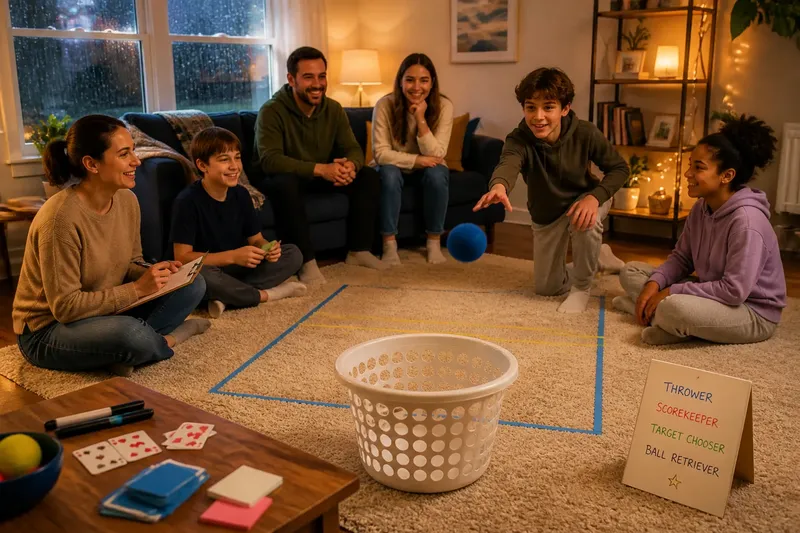
The most common rainy-day game-night mistake is choosing one fixed format before you know who can join or how much space you have. That can leave newcomers watching while experienced players dominate, or force a game to stop when someone arrives late. A better rainy-day game night starts with a format you can resize: short rounds, flexible teams, and simple ways to enter or leave play.
Think of the room as a place for shared activity, not as a table that needs to be arranged around a board. Choose games that use a clear play area and materials already at hand, such as a soft ball, paper targets, or a deck of cards. Then decide how to adapt the rules without changing the point of the game.
Choose flexible formats
Indoor play works best when the format can absorb changes. Rotating partners, cooperative goals, and short rounds let people join without requiring a full restart. Pick a game with a clear objective and a visible end to each round, such as reaching a target, completing a pattern, or carrying an object through a marked route.
Match the activity to the available space. A hallway can suit a gentle rolling or tossing game; an open living-room area may fit a movement challenge; a shared table can support a card or drawing game. Clear fragile objects from the route, keep throws gentle, and use soft materials when play happens near furniture.
Do not assume that every player wants the same level of movement or competition. Offer roles that contribute to the same goal: a player may throw, keep score, choose the next target, or call out a sequence. The role should affect how someone participates, not whether they count as part of the game.
Set adaptable rules
Before starting, agree on the objective, how a turn works, and how a round ends. Keep the explanation brief enough to remember. If a rule creates confusion, pause between rounds and change one thing at a time, such as moving a target closer or allowing a second attempt.
Use a team format when skill levels or ages vary. Rotate who partners with whom, or let the group work toward a shared score instead of ranking individuals. Cooperative play does not mean removing a challenge; it means making success depend on contributions that can differ from player to player.
Make it easy to adjust the activity without treating an adjustment as a special favor. A closer target, a seated version, or an extra planning turn can be available to anyone. If players disagree about whether a change is fair, agree on the rule before the next round and apply it to everyone who wants to use it.
Keep everyone in play
Give newcomers a low-pressure way to start. They can join at the next round, partner with someone familiar with the game, or take a supporting role for one turn before choosing a more active one. Avoid making a new player explain why they want a particular role or pace.
For a game with waiting turns, use brief rounds or add a useful role for players who are out temporarily, such as retrieving a soft ball or selecting the next challenge. Keep that role optional; nobody should have to perform extra work to remain included.
Say a group has four players, one newcomer, and a narrow living-room area. They choose a soft-ball target game with teams of two, using a laundry basket as the target. The newcomer first chooses which team goes first, then joins the next round; the group moves the basket closer after a round in which throws repeatedly miss. The observable result is that the newcomer has a clear entry point and the changed distance gives both teams another reachable challenge.
What should change?
What if someone arrives late?
Use a round-based format and explain the goal between rounds. Add the new player to a team or offer a role in the next round rather than interrupting play midway.
What if abilities differ?
Offer shared goals and several ways to contribute, such as aiming, choosing, tracking, or moving. If one version still excludes someone, change the distance, pace, or role before the next round.
What if the game feels too competitive?
Switch from individual rankings to a shared group target, or rotate partners so the same players do not repeatedly face each other. If the group still prefers competition, keep the teams but shorten the rounds.
What if the room is too small?
Replace running or forceful throws with seated actions, rolling, or a stationary challenge. If the play area remains crowded, move to a card, word, or drawing game that needs less movement.
Check the play format
- Check the clear floor area: If players can move without crossing furniture or a walkway, choose a gentle movement game; otherwise, switch to a seated or stationary format.
- Check the materials: If the game uses soft, easy-to-handle items, keep it in the room; otherwise, replace hard or fragile equipment with paper, cards, or a soft ball.
- Check the round length: If a round ends cleanly, use it for late arrivals and rotating teams; otherwise, choose a game with shorter turns or a shared stopping point.
- Check the entry point: If a newcomer can join at a round boundary, keep the format; otherwise, add a partner role or switch to a game with easier entry.
- Check the available roles: If players can contribute through different actions, offer those choices; otherwise, adapt the objective so the group can share decisions or turns.
- Check the challenge level: If most players can attempt the task, keep the rules; otherwise, adjust distance, pace, or target size and reassess after a round.
Leave room for change
It is not worth the effort to build an elaborate theme, buy special equipment, or devise a separate rule set for every player. A soft ball, paper markers, and a clear agreement about teams can do more for flexible play than a complicated setup.
Keep the game’s core objective intact while changing the route into it. For a rainy-day game night, that means choosing a format that can shift with the group: rotate partners, offer distinct roles, and make adjustments between rounds. The next time someone joins or the room feels cramped, change one rule and give the group a fresh way to play.